
Air Quality Monitoring Technology for Automotive & Smart Transportation
Air Quality Monitoring Technology is a critical component of Automotive and Smart Transportation ecosystems, enabling real-time detection of particulate matter (PM2.5 and PM10) to support environmental safety, regulatory compliance, and intelligent transportation infrastructure.
This technology is designed to monitor fine and coarse airborne particles that directly impact air quality, public health, and vehicle-related environments such as roads, tunnels, logistics hubs, and transportation facilities.
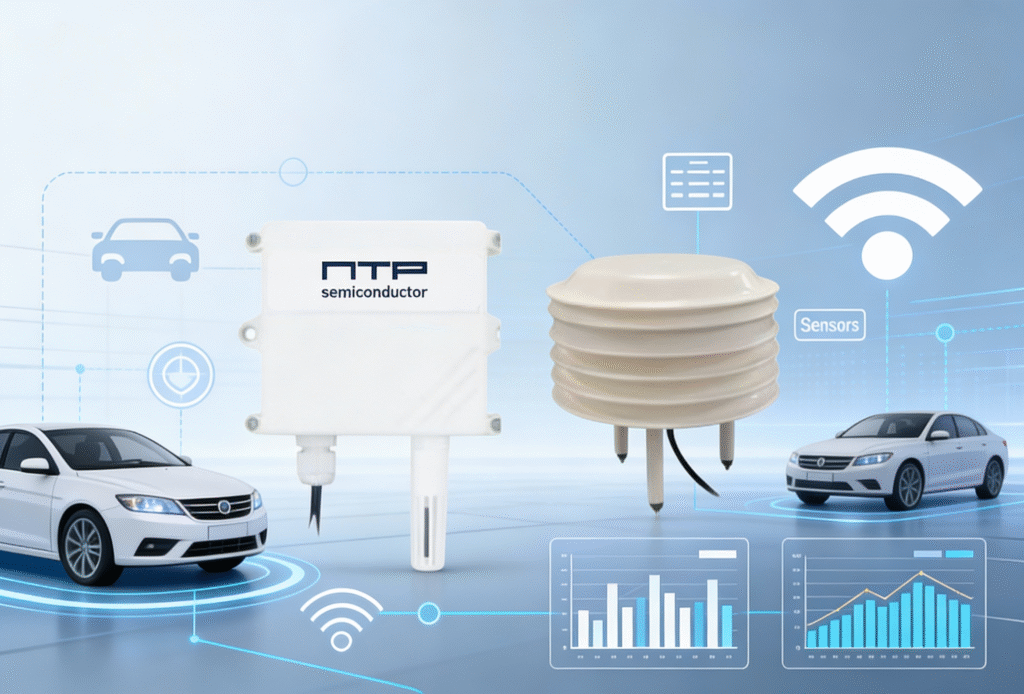
Core Technology Capabilities
High-Resolution Particulate Matter Detection
The technology supports simultaneous monitoring of PM2.5 and PM10 with a wide measurement range of 0–1000 μg/m³ and a resolution of 1 μg/m³. Using infrared laser detection technology, it delivers reliable and repeatable measurements even in high-pollution environments.
Designed for Transportation Environments
With a robust IP54-rated enclosure, flame-retardant ABS housing (UL94V0), and optional outdoor shelter, the system is engineered to operate reliably in roadside installations, transportation hubs, and semi-outdoor automotive environments exposed to dust and pollutants.
Fast Response for Dynamic Conditions
A response time of less than 90 seconds and short system pre-heat time (≤2 minutes) enable the technology to react quickly to changing traffic density and pollution levels—critical for real-time traffic and air-quality assessment.
Industrial Communication & System Integration
Supporting RS-485 (2-wire) communication with Modbus RTU, the technology integrates seamlessly with:
- Intelligent Transportation Systems (ITS)
- Tunnel and parking ventilation control systems
- SCADA and traffic management platforms
- Environmental monitoring and analytics systems
Standard register mapping allows easy integration with PLCs and centralized control systems.
Low Power & Continuous Operation
Operating on 10–30 VDC with power consumption below 1.2W, the technology is optimized for continuous monitoring across distributed transportation infrastructure with minimal energy overhead.
IoT & Connected Transportation Platforms
When connected via optional NB-IoT gateways, the technology enables:
- Real-time remote air quality monitoring
- Cloud-based visualization and reporting
- Historical trend analysis of traffic-related pollution
- Centralized management of multi-location sensor networks
This connectivity supports data-driven decisions for emission control, traffic planning, and sustainable mobility strategies.
Supporting Automotive & Smart Transportation Applications
- Roadside and highway air quality monitoring
- Traffic tunnel and underground parking facilities
- Smart transportation hubs and logistics centers
- Urban mobility and emission assessment
- Environmental compliance and smart mobility planning